There has been a great deal of recent interest — much of it driven by social media — in appliances that claim to reshape the face, widen the airway and change the profile. You may have come across terms such as myofunctional therapy, orthotropics, airway orthodontics, Myobrace, or simply mewing. Some of these ideas have a long clinical history; others are newer, more contested, and not yet supported by the level of evidence we would expect before adopting a treatment as routine care.
We think it’s important to be open about where these approaches sit, because parents and patients deserve a clear, specialist-led answer rather than a marketing pitch.
Guiding the growth of the jaws and the airway is not a fashion or a trend for us — it is a core part of specialist orthodontic training and one of the jobs a specialist orthodontist is uniquely qualified to do. We have been treating growing patients with growth-modification appliances for over 30yrs and we continue to do so where the diagnosis is right for the child in front of us and where the evidence supports it.
What has changed dramatically is how we can do it. The bulky acrylic expanders and removable mono bloc functional appliances that defined this kind of treatment in the 1960s, 70s and 80s have largely been superseded by modern alternatives. Even the trusted Clark Twin Block has more aesthetic competition these days from modern appliances that are precise, can simultaneously move teeth as well as reposition jaws, and are customised and discreet alternatives. For example, recent developments that have aided us in this regard include:
Used together, these tools let us offer the intent behind growth modification — creating space, balancing the bite, guiding the face — with the precision and finish a specialist practice can stand behind.
In November 2024, following a recent General Dental Council fitness-to-practice case, the British Orthodontic Society issued a public statement on the kinds of claims now circulating online about orthodontic treatment. We endorse it fully. The BOS advised patients to proceed with caution and seek a second opinion if they are told that an orthodontic treatment will:
The Society’s position is that there is no scientific evidence to suggest patients can change the shape of their face, or improve their intelligence, by chewing or by holding the teeth and tongue in a closed position. See the BOS website link for further information and also the blog page of the globally respected orthodontic academic, Professor Kevin O’Brien.
https://bos.org.uk/news/claims-about-orthodontics/
Independent academic orthodontists who have reviewed the evidence on myofunctional appliances and orthotropic-style treatment over many years — most prominently the aforementioned Professor Kevin O’Brien, Emeritus Professor of Orthodontics at the University of Manchester — have reached a consistent and measured conclusion: the published trials are sparse and the effects are small.
A well-selected functional appliance, aligner system, or fixed appliance can predictably achieve a 6–8 mm overjet reduction in a co-operative growing patient — often in a shorter time frame. By comparison, the evidence base for myofunctional appliances as a stand-alone treatment is, frankly, modest.
That does not make the underlying ideas worthless. Nasal breathing, lip competence, tongue posture and a healthy airway genuinely matter, and we screen for all of them as part of every assessment. We are also realistic that genetics, the environment and oral function all contribute to the way a face and bite develop. What we do not do is promise parents that an off-the-shelf silicone trainer worn for an hour a day will reliably reshape their child’s face, transform their airway, or reliably eliminate the need for braces. The evidence simply is not there.
If you have read about myofunctional appliances, mewing, palatal expanders or “growing the face forward” and you are wondering what is right for your child, the most useful thing we can offer is a thorough specialist assessment, an honest discussion of what the evidence does and does not support, and — if treatment is indicated — access to the most precise and discreet appliances currently available, fitted by a clinician who has spent his career in this field.
We would rather talk you out of treatment your child does not need than into treatment they do not.

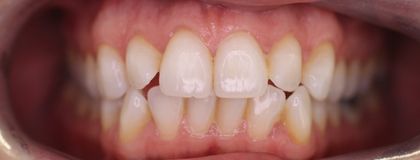 Before
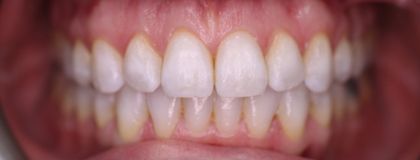 After
After
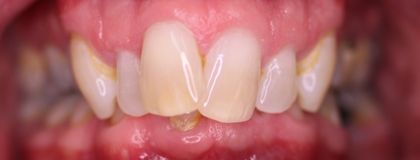 Before
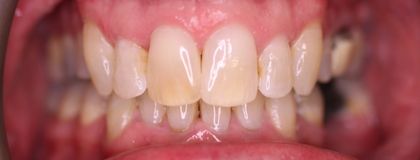 After
After
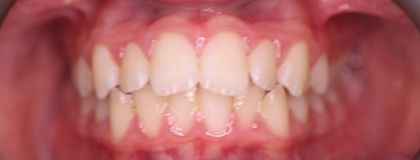 Before
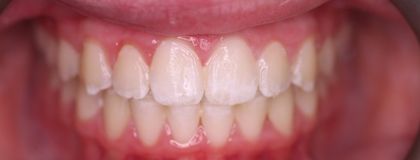 After
After
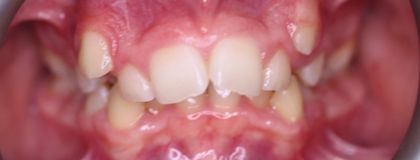 Before
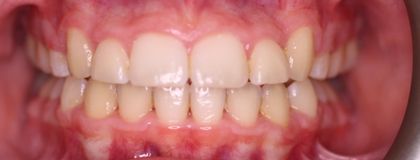 After
After
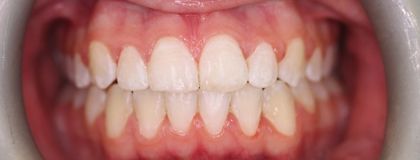 Before
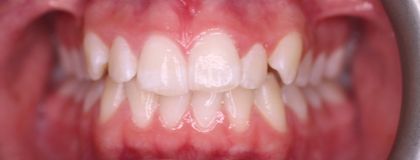 After
After

Our specialist orthodontists are ready to help. Fill in the form to book your no-obligation consultation.
Not necessarily worried — but a specialist assessment first is sensible option. A myofunctional trainer is not the same as a comprehensive orthodontic plan, and the published evidence for these appliances on their own is modest. We would rather see your child early, give you an honest opinion on whether any treatment is needed yet, and — if it is — talk you through every option, including the specialist-led alternatives that may be more predictable.